
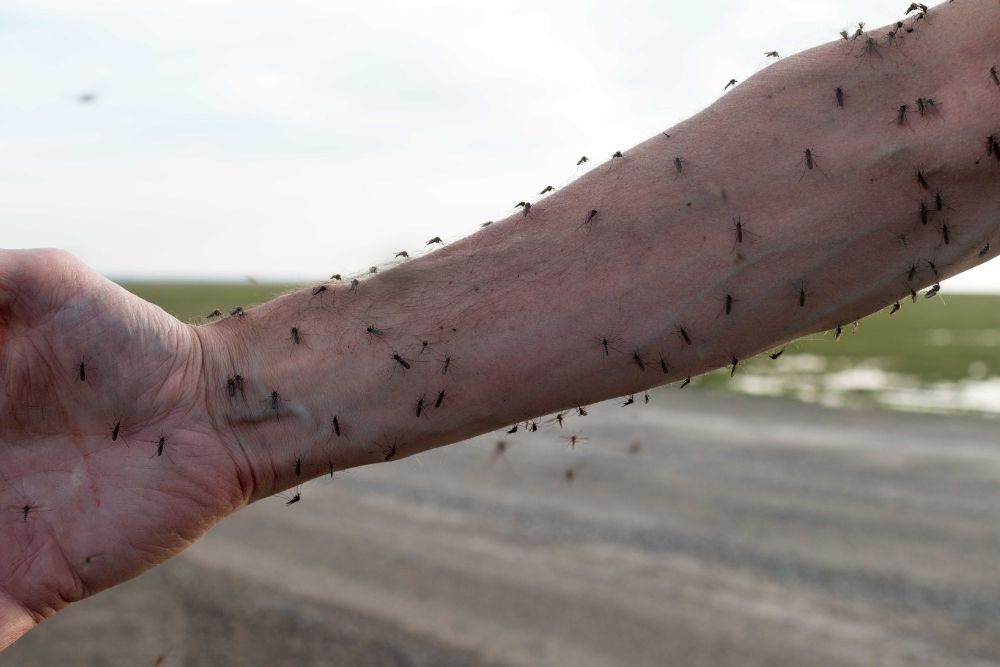
Florida’s rainy season can turn a quiet backyard into a mosquito breeding zone almost overnight. For homeowners in Hudson, Spring Hill, New Port Richey, Port Richey, Wesley Chapel, Tarpon Springs, Palm Harbor, Dunedin, and nearby communities, mosquitoes are not just a nuisance. They can make patios, pools, porches, outdoor kitchens, and evening yard time almost unusable.
Effective mosquito control in Florida’s rainy season requires more than spraying the air when mosquitoes are already biting. The best results come from combining three things: standing water reduction, larvicide treatment, and barrier sprays. That combination attacks mosquitoes at different stages of their life cycle instead of only chasing adult mosquitoes after the problem is already active.
Why Florida’s Rainy Season Creates Mosquito Problems So Quickly
Mosquitoes need water to reproduce. They do not need a pond, lake, or swamp. Many mosquito species can breed in very small amounts of standing water.
That means a Hudson backyard can become a mosquito source after water collects in:
- Plant saucers
- Buckets
- Tarps
- Wheelbarrows
- Boat covers
- Trash can lids
- Gutters
- Birdbaths
- Pool toys
- Drainage areas
- Low spots in the yard
- French drains
- Irrigation boxes
- Potted plants
- Decorative fountains
- Uncovered outdoor storage
After repeated rain, these areas may stay wet long enough for mosquito larvae to develop. In Florida heat, that process can happen fast. This is why mosquito control in Florida’s rainy season has to be proactive. Waiting until mosquitoes are swarming usually means they have already been breeding nearby.
Standing Water Is the First Problem to Solve
The first step in mosquito control is removing or reducing standing water. A professional mosquito service is far more effective when the property is not constantly producing new mosquitoes. That does not mean every wet area can be eliminated, especially in Florida. But many breeding sources can be reduced with consistent attention.
Homeowners should check:
- Gutters after storms
- Potted plants and saucers
- Trash cans and recycling bins
- Children’s toys
- Pool decks
- Outdoor furniture covers
- Drainage ditches
- Birdbaths
- Pet bowls
- Storage containers
- Grill covers
- Low areas near patios and fences
In Hudson and other parts of Pasco and Hernando counties, larger yards often have hidden mosquito sources along fence lines, sheds, wooded edges, and drainage areas. In North Pinellas communities like Palm Harbor, Tarpon Springs, and Dunedin, dense landscaping and shaded patios can hold moisture longer than homeowners realize. The problem is rarely one obvious puddle. It is usually multiple small water sources spread across the property.
Why Dumping Water Is Not Always Enough
Dumping standing water helps, but it does not solve every mosquito issue. Some water sources are hard to eliminate. Drainage areas, swales, stormwater collection points, retention-adjacent yards, bromeliads, tree holes, French drains, and low spots may continue holding water during rainy season. That is where larvicide becomes important.
Larvicide targets mosquitoes before they become flying adults. Instead of waiting for mosquitoes to hatch and start biting, larvicide is used in appropriate water-holding areas to interrupt development. This matters because adult mosquito sprays alone cannot stop mosquitoes that are still developing in hidden water sources.
What Larvicide Does
Larvicide is used to treat mosquito breeding areas where water cannot be removed. It is designed to control mosquitoes in the larval stage before they mature into adults.
In a rainy-season mosquito plan, larvicide may be considered for areas such as:
- Drainage zones
- Retention-adjacent areas
- Low spots that repeatedly collect water
- Containers that cannot be emptied immediately
- Certain landscape water features
- Irrigation boxes
- Other persistent water-holding locations
A mosquito control program that includes larvicide is usually more complete than a spray-only approach because it addresses the source of future mosquito activity. For Florida properties, this is especially important after several days of rain. Adult mosquitoes may be what homeowners notice, but larvae are what keep the problem coming back.
What Barrier Sprays Do
Barrier sprays target adult mosquitoes that rest in shaded vegetation and protected outdoor areas.
Mosquitoes often rest in:
- Shrubs
- Hedges
- Palm fronds
- Tall grass
- Fence lines
- Tree canopies
- Ivy
- Dense landscaping
- Under decks
- Around patios
- Near pool cages
- Along shaded sides of the home
Barrier sprays are applied to mosquito resting areas to reduce adult mosquito activity around the property. This can make outdoor spaces more usable, especially during peak mosquito season.
For homeowners in Hudson, Spring Hill, New Port Richey, Wesley Chapel, Tarpon Springs, Palm Harbor, and Dunedin, barrier sprays are especially useful around patios, pool areas, outdoor seating, shaded side yards, and landscape-heavy properties. But barrier sprays work best when combined with standing water reduction and larvicide. Spraying adult mosquitoes while ignoring breeding sources is a short-term approach.
Why Barrier Sprays Alone Are Not Enough
A barrier spray can reduce adult mosquito pressure, but it does not eliminate every future mosquito. If the property has standing water, mosquitoes can continue breeding. If neighboring yards, wooded areas, canals, retention ponds, or drainage ditches are producing mosquitoes, new adults can continue moving into the area. That is why mosquito control in Florida’s rainy season should be viewed as pressure reduction, not a one-time cure.
- The best strategy is layered:
- Remove what water you can
- Treat what water you cannot remove
- Reduce adult mosquito resting zones
- Repeat service during active mosquito season
- Monitor problem areas after heavy rain
This layered approach is much more realistic for Florida than expecting one treatment to eliminate mosquitoes for an entire season.
Why Mosquitoes Are So Bad Near the Gulf Coast
Hudson and the surrounding Gulf Coast areas create ideal mosquito conditions. Moisture, heat, shaded vegetation, canals, retention areas, marshy land, and frequent rain all contribute to mosquito pressure. Homes near wooded lots, water, drainage easements, or dense landscaping often experience heavier mosquito activity.
Hernando County properties may have larger lots, more vegetation, and more hidden water sources. Pasco County communities from Hudson to Wesley Chapel may deal with a mix of older homes, new developments, retention ponds, and irrigation-heavy landscaping. North Pinellas communities like Tarpon Springs, Palm Harbor, and Dunedin often have mature landscaping, shaded patios, and coastal humidity. The local environment matters. Mosquito control should be built around the way mosquitoes behave in Florida’s climate, not around a generic spray schedule.
What Homeowners Can Do Between Treatments
Professional mosquito control works better when homeowners reduce the conditions that allow mosquitoes to return.
Between treatments, homeowners should:
- Empty containers after rain
- Clean gutters regularly
- Refresh birdbath water often
- Store buckets and toys upside down
- Keep pool water circulating
- Trim overgrown shrubs
- Remove yard debris
- Check tarps and boat covers
- Avoid overwatering
- Look for water in plant saucers
- Inspect low spots after storms
Small changes add up. A single overlooked container can produce mosquito activity close to the home. For homeowners with pets, children, outdoor kitchens, pools, or screened areas, mosquito reduction can significantly improve how the property feels during rainy season.
How Often Mosquito Control Is Needed During Rainy Season
During Florida’s rainy season, mosquito control usually needs to be consistent. Rain, heat, and humidity can break down outdoor treatments over time and create new breeding areas quickly. Properties with heavy shade, standing water, dense vegetation, or nearby water sources may need ongoing service throughout the active season.
A professional mosquito control plan should adapt to the property. A small, dry, open yard in Dunedin may not have the same mosquito pressure as a wooded property in Spring Hill or a canal-adjacent home in Hudson. The goal is not to apply the same treatment everywhere. The goal is to identify where mosquitoes are breeding, where they are resting, and where people are actually using the outdoor space.
Signs You Need Professional Mosquito Control
You may need professional mosquito control if:
- Mosquitoes return quickly after DIY sprays
- You are bitten during the day or early evening
- Your patio or pool area is uncomfortable
- You have standing water nearby
- Your yard has dense landscaping
- You live near canals, retention ponds, woods, or drainage areas
- Mosquitoes are active around doorways or shaded areas
- You have tried dumping water but still have activity
DIY mosquito products may provide temporary relief, but they often miss the source. A professional inspection can identify breeding zones, resting areas, and environmental conditions that keep the problem active.
Seabreeze Pest Control’s Local Approach
Seabreeze Pest Control serves Hudson and the surrounding region, including Hernando, Pasco, and North Pinellas counties. That local service area matters because mosquito pressure changes from one community to the next. A mosquito plan for a Hudson home near water may look different from a property in Wesley Chapel with retention ponds, or a Dunedin home with mature landscaping and shaded outdoor living areas.
The right plan considers:
- Where water collects
- Where mosquitoes rest
- Where people spend time outside
- How rain affects the property
- How dense the landscaping is
- Whether nearby areas contribute to mosquito pressure
- Whether larvicide, barrier sprays, or both are appropriate
This is the difference between simply spraying and building a mosquito control strategy that actually fits Florida’s rainy season.
The Bottom Line
Mosquito control in Florida’s rainy season works best when it targets the full mosquito life cycle. Standing water reduction removes breeding sites. Larvicide helps control larvae in water that cannot be eliminated. Barrier sprays reduce adult mosquitoes resting around landscaping, patios, pool areas, and shaded outdoor spaces.
For homeowners in Hudson, Spring Hill, New Port Richey, Port Richey, Wesley Chapel, Tarpon Springs, Palm Harbor, Dunedin, and nearby communities, the most effective mosquito control is local, layered, and consistent. Florida mosquitoes are persistent. Your mosquito control strategy should be just as persistent.
Dealing with persistent mosquitoes around your home? Contact Seabreeze Pest Control to discuss a mosquito control plan designed for your property and Florida’s rainy-season conditions.

Brian Cummings has led Seabreeze Pest Control for 32 years with a people-first philosophy—care for your team, and they’ll care for your clients. His values shape the trusted, family-owned company Seabreeze is today.